CFOP 20 algorithms
Reduced CFOP
The same method speedcubers use, with 20 algorithms instead of the full guides' 119 cases. The cross and F2L are solved by thinking; OLL and PLL in two looks each. It is slower than full CFOP, but it already is CFOP: every case you learn later replaces a part of this method.
The 4 steps
- C
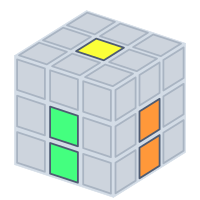 1 · The crossThe four white edges on the bottom, each with its centre.no algorithms
- F
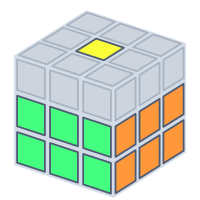 2 · F2LThe first two layers, one pair per slot. Intuitive, with 4 basic cases.4 algorithms
- O
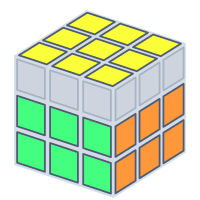 3 · 2-look OLLThe whole top face yellow: the yellow cross, then the corners.3 + 7 = 10 algorithms
- P
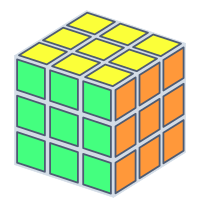 4 · 2-look PLLEvery top piece to its place: the corners, then the edges.2 + 4 = 6 algorithms
1 · The cross
The four white edges go on the bottom, each with its other colour next to its centre. In CFOP the cross is built straight on the bottom, without the beginner's daisy: that way the cube is ready for F2L without turning it over.
- Look before you turn: find the four white edges and work out where each one goes before the first turn.
- Each edge with its centre: white facing down is not enough, the other colour has to sit next to its centre.
- Don't break what is done: if a turn takes out an edge already placed, put it back afterwards with the opposite turn.
- Practise with the cross on the bottom: at first it is hard not to see it, but move to the bottom soon.
Two examples: the white-green edge
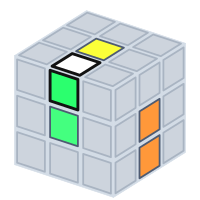
On top, above its centre, white facing up: a half turn.
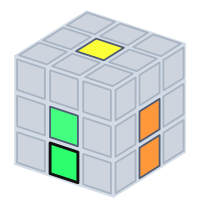
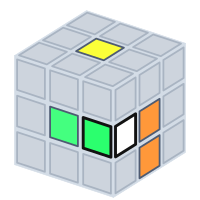
In the middle layer, white facing right: one turn brings it down.
2 · Intuitive F2L
With the cross done there are four empty slots at the bottom corners. Each slot is filled with a pair: its white corner and the middle-layer edge that goes above it. Always work on the front-right slot; to move on to the next, turn the whole cube (the cross stays on the bottom).
- Find the pair: the corner and the edge with the slot's two colours.
- Set it up: with U turns and by taking out stuck pieces, make it one of the 4 basic cases.
- Insert it: the basic case puts it in with 3 or 4 moves, without breaking the cross or the other slots.
Three examples: set it up and a basic case is left
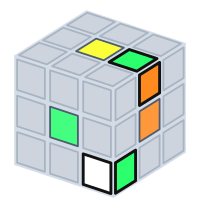
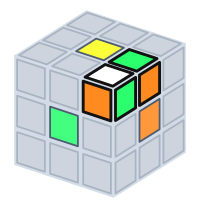
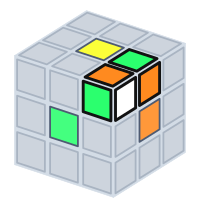 F2L 14
The edge is far from its corner: bring them together.
set up
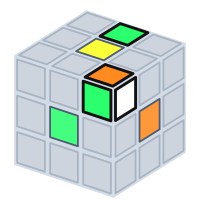 case 4 is left
and it's in
The 4 basic cases
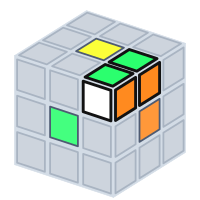 1PAIR CONNECTED · WHITE SIDEWAYSURU'R'
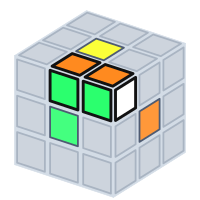 2PAIR CONNECTED · WHITE ON THE RIGHTU'F'UF
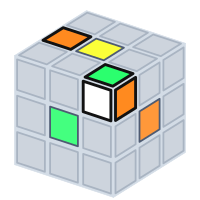 3PAIR SPLIT · WHITE IN FRONTF'U'F
- 4PAIR SPLIT · WHITE ON THE RIGHTRUR'
Of the 37 F2L cases that are not basic, 24 are solved exactly like this: a few moves to set it up and one of the 4 basic cases (checked with the series' simulator). The rest can be set up too, with a few more turns; when you want to go faster, each one has its algorithm in the F2L guide.
3 · 2-look OLL
Step 1 · the yellow cross (the corners don't matter yet)
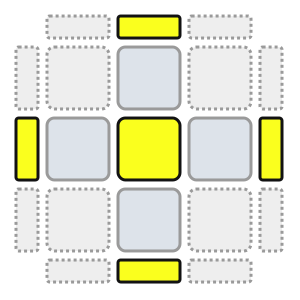
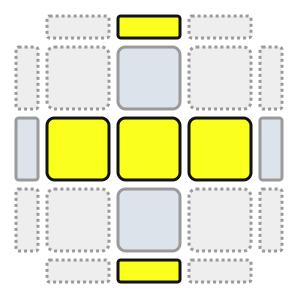
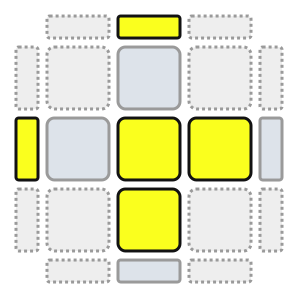
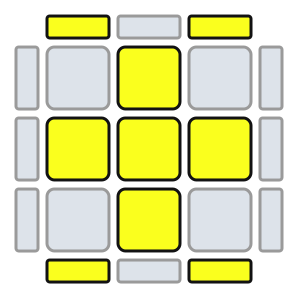
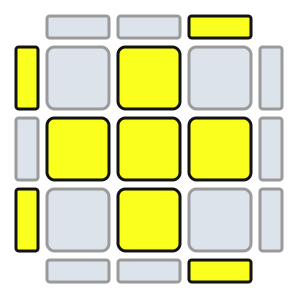
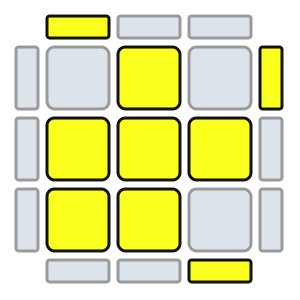
Step 2 · the corners: the seven cross cases
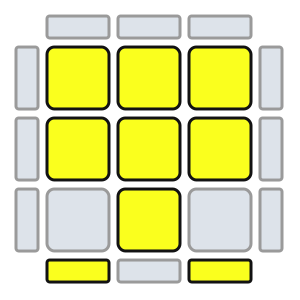
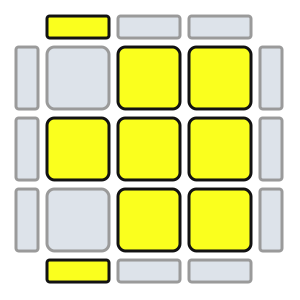
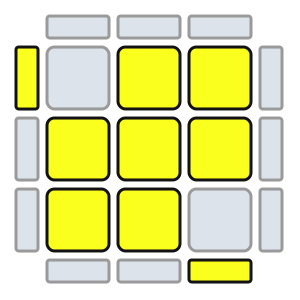
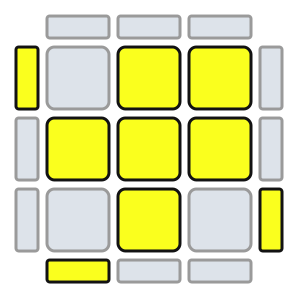
4 · 2-look PLL
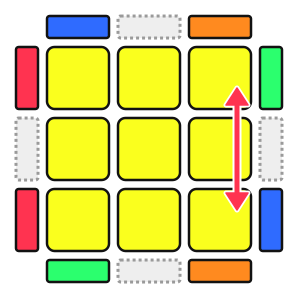
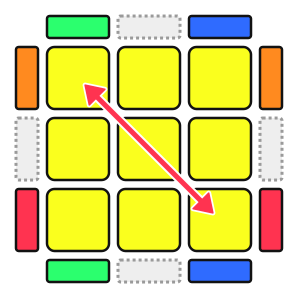
Step 1 · the corners (the edges don't matter yet)
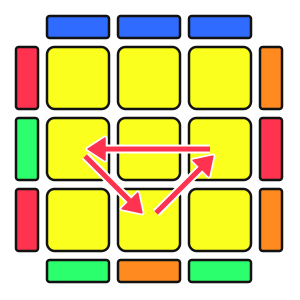
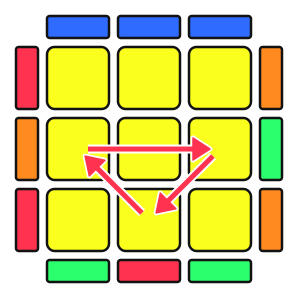
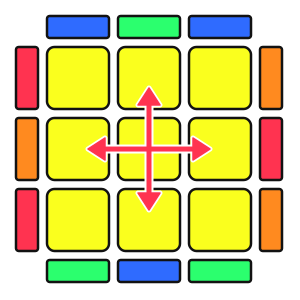
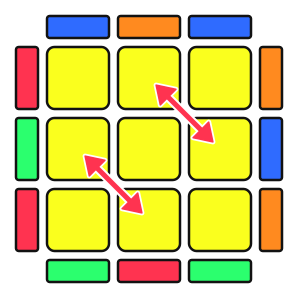
Step 2 · the edges
What next?
Once the reduced CFOP comes without thinking, swap one part at a time for its full version:
Prefer paper?