CFOP Triggers
Triggers: the moves that keep coming back
A trigger is a short sequence that comes back again and again inside the algorithms. Learn it as one gesture and a 15-letter algorithm turns into “sexy, sexy and a bit more”.
What is a trigger?
It is a sequence of 3 to 7 moves that comes back inside many algorithms. You don't memorise it as loose letters but as one movement of the hand: you think of it once and the hand does the rest. That is why our guides and sheets put them in brackets.
1Sexy move the “sexy”
The most used trigger in CFOP. Four right-hand moves done without letting go of the cube: R with the wrist, U with the index finger, R' back and U' with the left index finger.
Step by step
- 1
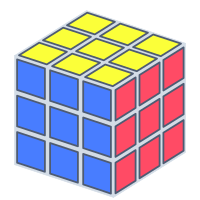 R
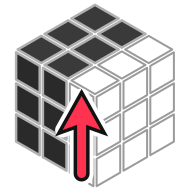 RIGHT LAYER · UP
- 2
 U
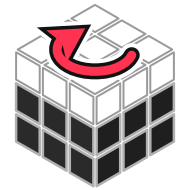 TOP LAYER · LEFT
- 3
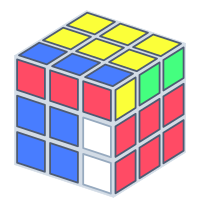 R'
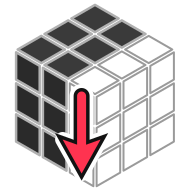 RIGHT LAYER · DOWN
- 4
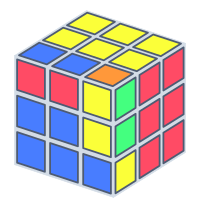 U'
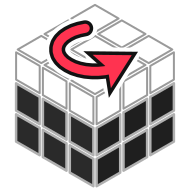 TOP LAYER · RIGHT
- Once
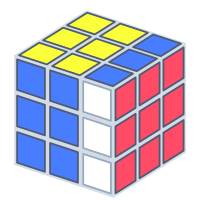
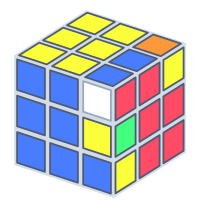 OnceThe cube after one trigger
Do it 6 times in a row: the cube comes back to the start
- 1×
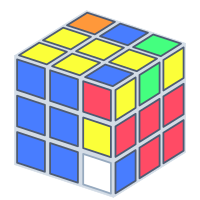 2×
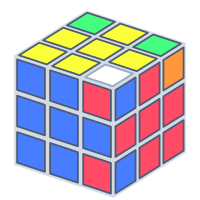 3×
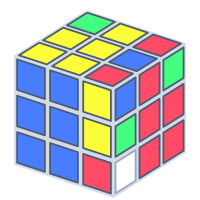 4×
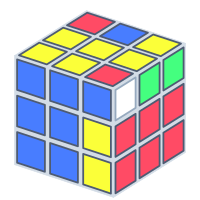 5×
- 6×
- = back to the start
2Reverse sexy starts with U
The sexy move starting with U. It is what puts the pair in its slot in the simplest F2L cases, and it comes back often in OLL.
Step by step
- 1UTOP LAYER · LEFT
- 2
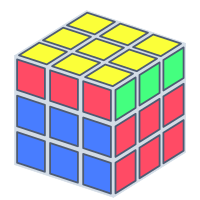 RRIGHT LAYER · UP
- 3
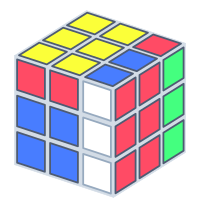 U'TOP LAYER · RIGHT
- 4
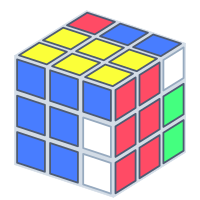 R'RIGHT LAYER · DOWN
- OnceOnceThe cube after one trigger
Do it 6 times in a row: the cube comes back to the start
- 1×
- 2×
- 3×
- 4×
- 5×
- 6×
- = back to the start
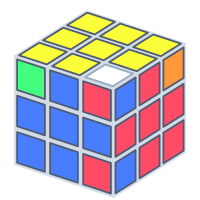
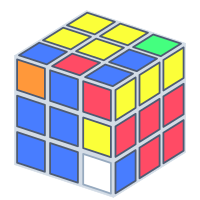
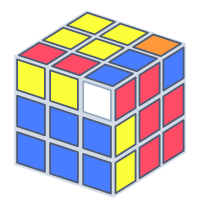
3Sledgehammer the “hammer”
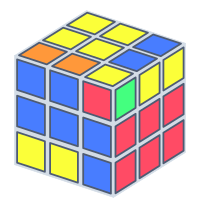
Four moves with R and F. Together with the sexy move it makes many OLLs: “sexy + sledgehammer” is remembered as two gestures, not eight letters.
Step by step
- 1R'RIGHT LAYER · DOWN
- 2
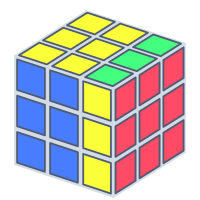 F
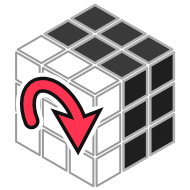 FRONT · CLOCKWISE
- 3
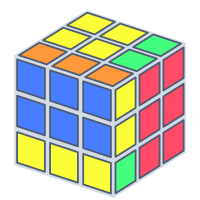 RRIGHT LAYER · UP
- 4
 F'
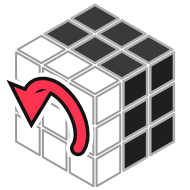 FRONT · COUNTER-CLOCKWISE
- Once
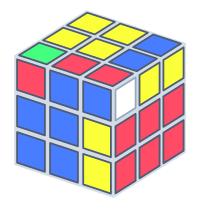 OnceThe cube after one trigger
Do it 6 times in a row: the cube comes back to the start
- 1×
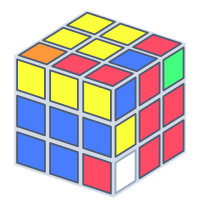 2×
 3×
 4×
 5×
- 6×
- = back to the start
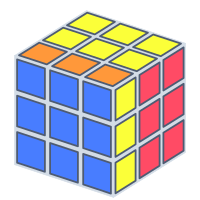
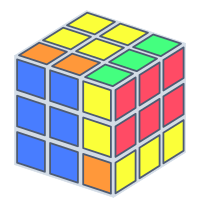
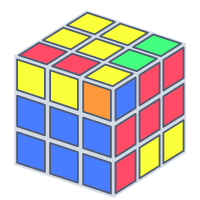
4Hedgeslammer the sledgehammer backwards
The sledgehammer done backwards. It shows up less often, but it pays to recognise it when reading the long PLL algorithms.
Step by step
- 1FFRONT · CLOCKWISE
- 2
 R'RIGHT LAYER · DOWN
- 3
 F'FRONT · COUNTER-CLOCKWISE
- 4
 RRIGHT LAYER · UP
- OnceOnceThe cube after one trigger
Do it 6 times in a row: the cube comes back to the start
- 1×
- 2×
- 3×
- 4×
- 5×
- 6×
- = back to the start
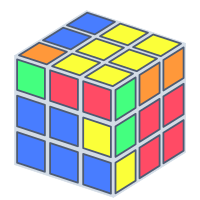
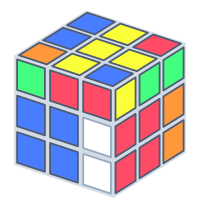
5Sune OLL 27
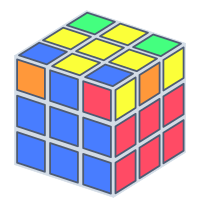
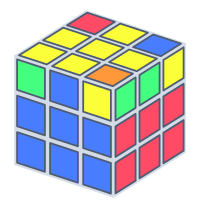
Seven moves that are a whole algorithm already (OLL 27) and show up inside others. In the beginner's method it is the one that orients the yellow corners.
Step by step
- 1RRIGHT LAYER · UP
- 2UTOP LAYER · LEFT
- 3R'RIGHT LAYER · DOWN
- 4UTOP LAYER · LEFT
- 5
 RRIGHT LAYER · UP
- 6
 U2
 TOP LAYER · HALF TURN
- 7
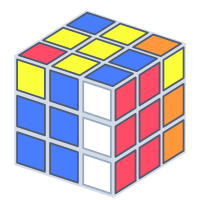 R'RIGHT LAYER · DOWN
- Once
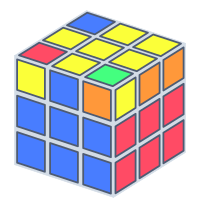 OnceThe cube after one trigger
Do it 6 times in a row: the cube comes back to the start
- 1×
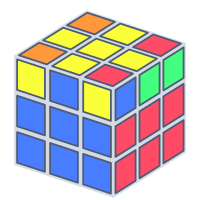 2×
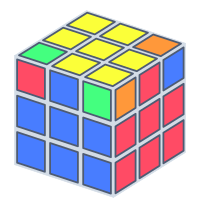 3×
 4×
 5×
- 6×
- = back to the start
6Anti-Sune OLL 26
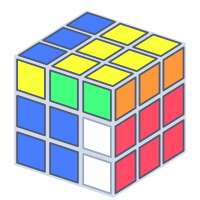
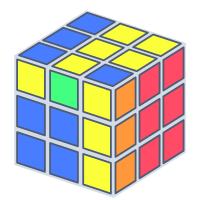
The Sune undone: the same moves read back to front, each turn reversed. If you know the Sune, you already know the anti-Sune.
Step by step
- 1RRIGHT LAYER · UP
- 2U2TOP LAYER · HALF TURN
- 3
 R'RIGHT LAYER · DOWN
- 4
 U'TOP LAYER · RIGHT
- 5
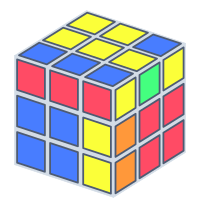 RRIGHT LAYER · UP
- 6
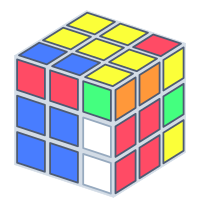 U'TOP LAYER · RIGHT
- 7
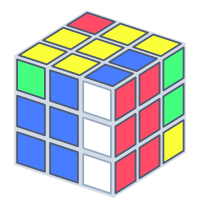 R'RIGHT LAYER · DOWN
- OnceOnceThe cube after one trigger
Do it 6 times in a row: the cube comes back to the start
- 1×
- 2×
- 3×
- 4×
- 5×
- 6×
- = back to the start
7Inserts R U R' · R U' R' · F' U F…
A face, a U turn and the same face back. It is the heart of F2L: that is how a pair goes into its slot or comes out of it, leaving the rest of the first two layers alone.
Step by step
- 1RRIGHT LAYER · UP
- 2UTOP LAYER · LEFT
- 3R'RIGHT LAYER · DOWN
- OnceOnceThe cube after one trigger
Do it 4 times in a row: the cube comes back to the start
- 1×
- 2×
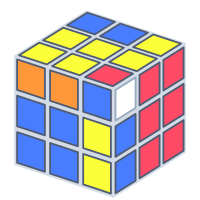 3×
- 4×
- = back to the start
Where it appears
- F2L 39/41
- 39 of the 41 cases
- OLL 47/57
- 47 of the 57 cases
- PLL 16/21
- 16 of the 21 cases
How to practise them
- Start with the sexy move: do it 6 times in a row and the cube comes back as it was. If it doesn't, a turn went wrong.
- Slow and even before fast. Speed comes by itself once the hand stops thinking about the letters.
- With a new algorithm, first look for the triggers you already know, and learn only what is left.
- Practise the left-hand mirror too: many cases are another case's reflection.
We count each trigger as written (with R, not with the wide r) in the algorithms of our guides and videos. The inserts are a family: any face, a U turn and the face back.
Prefer paper?